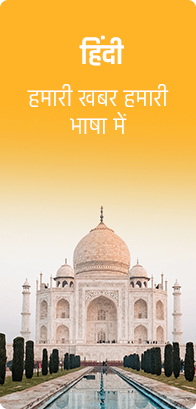
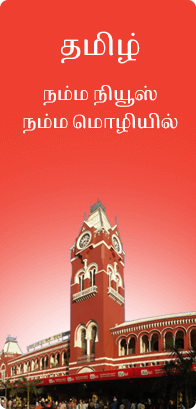
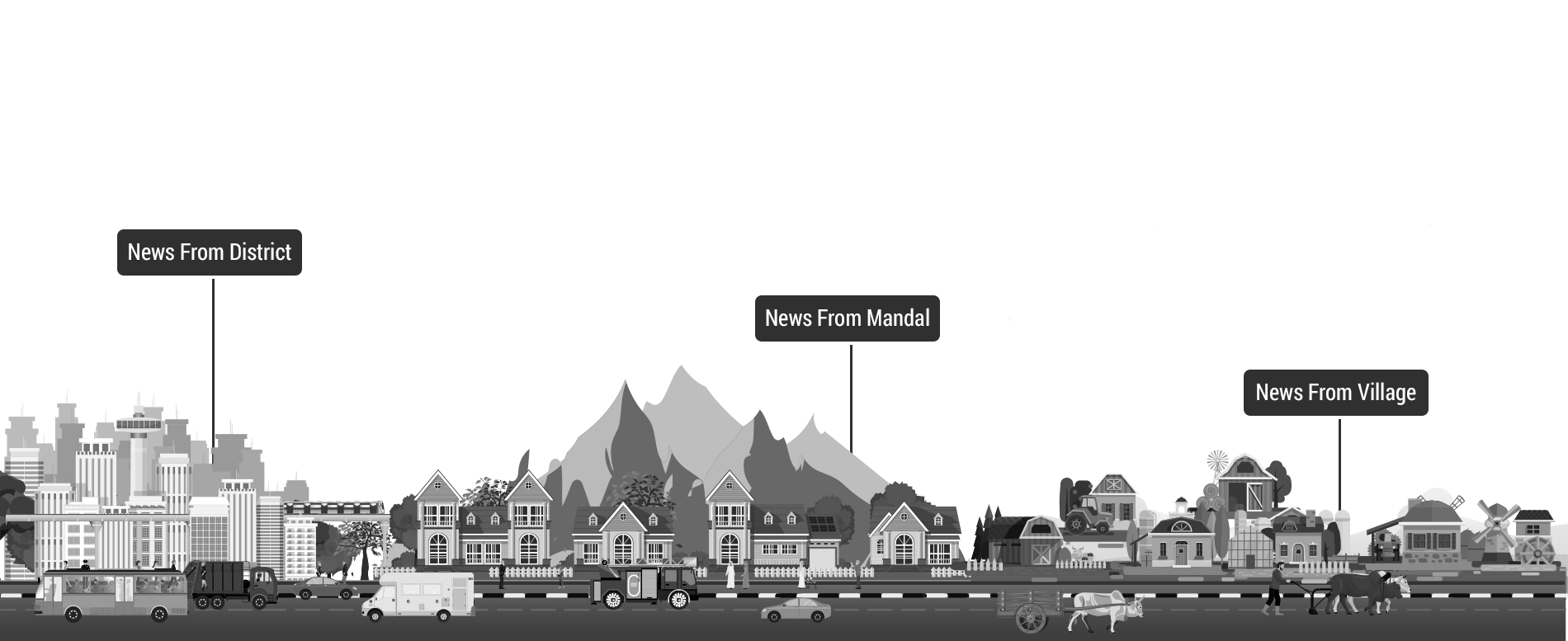
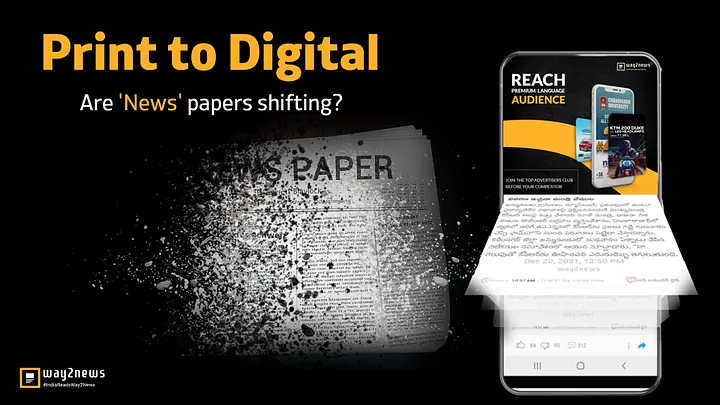
Way2News, India's largest hyperlocal news app covers news from 400 districts and generating more than 4 billion screen views every month - that's 3 times the entire Indian population. This compression exposes modern attention architecture

Let your friends read the news you intend to share with them.
Travel, Health, Finance & many more- Pick Magazines of your favourite topic and lay back to read.
Cinema, Business or sports, read the News from the category of your preference.
Reading in dark? Then make it better for your eyes with 'Night Mode'
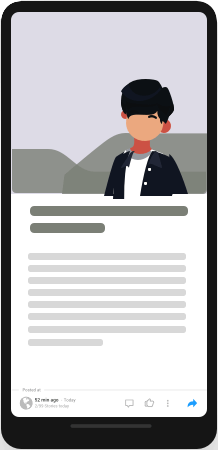
Read the News articles at ease by just flipping them up and down.
Participate in Polls on different issues and contribute your opinion to country wide taken stats.
Read the most trendy and widely shared flips from 'Top Buzz'.
Save the articles you want to revisit by adding them to 'My bookmarks'.
Way2News brings real time news. We understand your reading preference and promise to deliver personalized news flips.

This compression exposes modern attention architecture. We live in systems that render people into handles and events into flags. A "hot" tag can lift a fragment into the spotlight, but it can also erase nuance. The same energies that accelerate discovery—sharing, retweeting, searching—flatten context. What was once a moment of human complexity becomes an index entry: "hot" on a dashboard, "ssis927" in a queue. We celebrate visibility while surrendering the cluttered, inconvenient stories that make visibility meaningful.
At first glance it’s shorthand for urgency. The word "hot" insists on immediacy—something worth attention, newly visible or dangerously heated. The adjacent "ssis927" reads mechanized: letters and digits aligning like a catalog entry or a server log. Together they compress two familiar impulses of our era: the human craving for sensational connection, and the algorithmic practice of reducing identity to tokens. The phrase marries the personal and the procedural, conjuring both a trending hashtag and an internal filename.
The small mystery of "ssis927 hot" is productive because it forces a choice: to reduce or to recover. We can let fragments govern our attention, and in doing so drift toward an ever-more-encoded life. Or we can use these sparks—ambiguous, inviting—to slow down and reconstruct the narrative, restoring texture to what algorithms have flattened. That, perhaps, is the most intriguing reading: a challenge to turn a terse token back into a full story.
Consider the social life of such a fragment. In chat rooms, forums, and comment threads it could be a rallying cry, an inside joke, a warning. It can signal belonging: those who recognize it share a map others lack. But fragments like this also create brittle communities dependent on inscrutable codes. Outsiders are excluded not by malice but by shorthand; the shorthand becomes identity.
This compression exposes modern attention architecture. We live in systems that render people into handles and events into flags. A "hot" tag can lift a fragment into the spotlight, but it can also erase nuance. The same energies that accelerate discovery—sharing, retweeting, searching—flatten context. What was once a moment of human complexity becomes an index entry: "hot" on a dashboard, "ssis927" in a queue. We celebrate visibility while surrendering the cluttered, inconvenient stories that make visibility meaningful.
At first glance it’s shorthand for urgency. The word "hot" insists on immediacy—something worth attention, newly visible or dangerously heated. The adjacent "ssis927" reads mechanized: letters and digits aligning like a catalog entry or a server log. Together they compress two familiar impulses of our era: the human craving for sensational connection, and the algorithmic practice of reducing identity to tokens. The phrase marries the personal and the procedural, conjuring both a trending hashtag and an internal filename.
The small mystery of "ssis927 hot" is productive because it forces a choice: to reduce or to recover. We can let fragments govern our attention, and in doing so drift toward an ever-more-encoded life. Or we can use these sparks—ambiguous, inviting—to slow down and reconstruct the narrative, restoring texture to what algorithms have flattened. That, perhaps, is the most intriguing reading: a challenge to turn a terse token back into a full story.
Consider the social life of such a fragment. In chat rooms, forums, and comment threads it could be a rallying cry, an inside joke, a warning. It can signal belonging: those who recognize it share a map others lack. But fragments like this also create brittle communities dependent on inscrutable codes. Outsiders are excluded not by malice but by shorthand; the shorthand becomes identity.