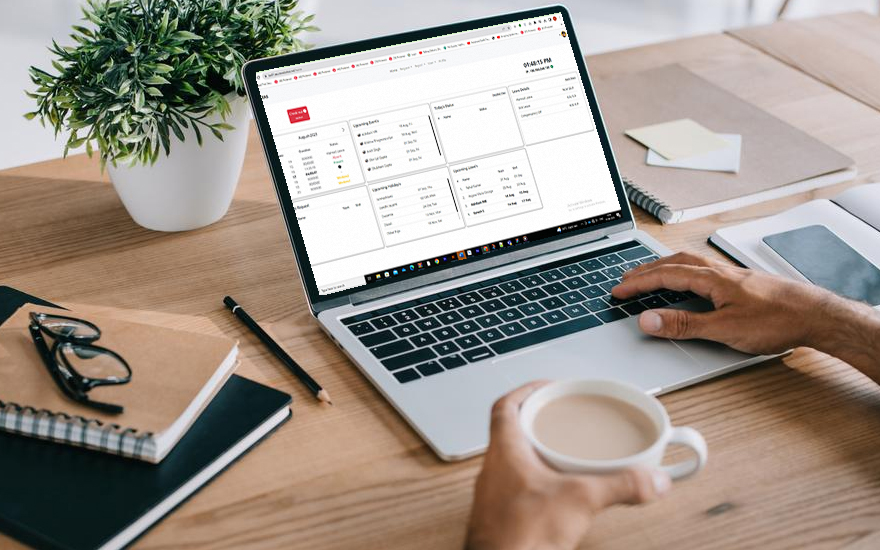
The Attendance Management System Application provides organizations with a comprehensive and reliable solution to efficiently track and manage employee attendance. By automating attendance recording and leave management, the application eliminates the need for manual paperwork, streamlining administrative tasks and reducing human errors.
1. Fighting game faithfulness vs. accessibility Dragon Ball FighterZ is widely praised for translating the anime’s frantic energy into tight, three-on-three 2.5D fighting mechanics. Consider the tension between fidelity and accessibility: the game captures exaggerated aerial combos and dramatic cinematic hits while using simplified inputs and auto-combo systems to lower the entry barrier. Is that compromise necessary for the genre’s growth, or does it risk diluting high-level expression? How might future anime fighters preserve spectacle while keeping a steeper skill ceiling for competitive depth? 2. Narrative spectacle in a competitive framework FighterZ blends single-player story and character-driven cinematics with a hardcore versus scene. This hybrid raises questions: what does it mean to design a game that must satisfy both narrative immersion and esports balance? Can story modes that change character rules or power levels coexist without undermining tournament integrity, or should developers treat single-player and competitive modes as fundamentally separate design problems? 3. Character representation and power fantasy Each character in FighterZ is a distilled version of their anime persona—moves, signature transformations, and personalities mapped to mechanics. This raises design ethics: how do you translate an iconic power fantasy into fair gameplay? When characters with canonical disparities (e.g., Goku vs. weaker side characters) are balanced for play, fans may feel authenticity is compromised. Conversely, strict adherence to lore can create unbalanced, unenjoyable matches. Where’s the ethical line between representing a fictional universe faithfully and ensuring a fun, balanced competition? 4. Monetization, roster bloat, and community cohesion The game’s post-launch model (DLC characters, seasonal additions) keeps the meta evolving but can fragment the player base and place pressure on newer players to buy content to stay current. How should developers balance ongoing revenue with a cohesive competitive ecosystem? Are rotating free character trials, curated balance patches, or bundled season passes sufficient to prevent a pay-to-keep-up culture? Consider social effects: does staggered DLC release energize or fracture online communities? 5. The aesthetics of impact: visual clarity vs. spectacle FighterZ’s flashy effects make exchanges feel weighty, but heavy visual clutter can obscure inputs, frame data, or hitboxes—critical info for high-level play. This tension is a broader question in game UX: how do you design visual feedback that preserves dramatic flair while keeping gameplay legible for both newcomers and pros? Could adaptive HUDs or togglable effect intensity be standard features to reconcile spectacle and clarity? 6. Cross-cultural fandom and competitive identity Dragon Ball is a global cultural phenomenon. FighterZ operates at the intersection of anime fandom, fighting-game culture, and esports professionalism. This blend amplifies identity dynamics: anime fans may prioritize faithful movesets and lore, while fighting-game purists emphasize frame advantage and tech. How does a game like FighterZ mediate these communities, and what lessons does it offer for designing games that must respect distinct subcultures without alienating either? 7. The longevity problem: evolving metas and legacy balance As patches and DLC alter characters, the “true” FighterZ experience shifts over years. For historians of games and esports, what constitutes the canonical version of such a live game? Should competitive scenes preserve legacy patches for archival tournaments, or is continual evolution preferable? This touches on videogames as living artworks versus fixed artifacts. 8. Teaching complex systems through spectacle FighterZ’s blend of spectacle and clear causal mechanics makes it an interesting case study for using entertainment to teach complex systems (timing, resource management, team composition). Could fighting games be intentionally designed as learning tools for cognitive skills—pattern recognition, predictive modeling—leveraging visceral feedback loops to accelerate expertise? 9. Modding, preservation, and the NSP format On console and PC, distribution formats (including NSP on Nintendo platforms) and the limits they impose raise preservation questions. As players mod or archive different builds, who owns the evolving cultural artifact? What responsibilities do publishers have for long-term access and archival of multiplayer-dependent games? 10. A speculative design prompt Design a sequel patch that introduces one bold systemic change while preserving FighterZ’s soul. Example: replace one-button assists with a “assist customization” system where each assist has modular properties (speed, damage scaling, recovery) unlocked via playtime—this preserves team identity, deepens strategy, and keeps new-player accessibility by offering default presets. What trade-offs would this introduce for balance, and how might it reshape high-level team diversity? If you'd like, I can expand any of these points into a short essay, a podcast-style script, a forum post debating one perspective, or a design outline for the speculative patch. Which format do you prefer?
Time Efficiency: Automating attendance management saves significant time for HR personnel and employees, eliminating the need for manual data entry.
Reduced Errors: Manual attendance tracking is prone to errors, whereas an automated system ensures precise data and reduces discrepancies.
Enhanced Employee Satisfaction: Employees can easily request leaves, view their attendance records, and access relevant information through the application, leading to increased employee satisfaction.
Better Resource Management: The application provides valuable insights into employee availability, enabling efficient resource allocation and project planning.
Cost Savings: The application reduces administrative overhead by streamlining attendance-related tasks, leading to cost savings for the organization.

With its automated features, the system ensures accurate attendance records, reducing errors and saving valuable time for HR personnel. The application enhances resource allocation, helps identify attendance trends. Overall, it's a reliable solution that optimizes attendance management processes, leading to improved workforce productivity.
Additionally, the application generates payroll reports which ensures accurate salary calculations based on attendance records. This report not only saves time but also guarantees that employees are compensated fairly for their work hours, reinforcing trust and satisfaction within the workforce.
This report not only saves time but also guarantees that employees are compensated fairly for their work hours, reinforcing trust and satisfaction within the workforce.
Supervisors and managers benefit from real-time insights into attendance data, allowing them to monitor employee attendance patterns and address any issues promptly. This data-driven approach enables better decision-making and resource allocation, ensuring that the right employees are available for specific tasks and projects.
This data-driven approach enables better decision-making and resource allocation, ensuring that the right employees are available for specific tasks and projects.
| Features | Freemium | Standard | Professional |
|---|---|---|---|
| Users Allowed | 5 | 30 | 300 |
| Shifts | 1 | 5 | Unlimited |
| User Type | 2 | 5 | 10 |
| Designation | 4 | 10 | 50 |
| Branches | 1 | 2 | 10 |
| Departments | 3 | Unlimited | Unlimited |
| Events | No | Yes | Yes |
| IP Restriction | No | Yes | Yes |
| Check in / Check Out | Yes | Yes | Yes |
| Leaves Management | Yes | Yes | Yes |
| Regularizations | Yes | Yes | Yes |
| Holiday Management | Yes | Yes | Yes |
| Payroll Reports | Yes | Yes | Yes |
| Price (Monthly) | Free | 1299 | 12990 |
| Price (Yearly) | Free | 12990 | 142999 |
| Extra Per User (Monthly / Yearly) | 59/650 | 49/550 | 39/450 |
| Extra Per Branch (Monthly / Yearly) | Not Applicable | 199/1250 | 199/2150 |
| Secure Login | Yes | Yes | Yes |
| Data Security | Yes | Yes | Yes |
| Support Options | E-mail + Phone | ||
| Archived Data Access | No | On Request | Yes |
The Attendance Management System Application is a powerful tool that modernizes attendance tracking, fosters organizational efficiency, and contributes to a more productive and engaged workforce. Whether for small businesses or large enterprises, the system proves to be an indispensable asset for managing employee attendance effectively.